Smart Home Automation: How Technology Is Transforming Modern Homes
The way we live at home is changing rapidly. From smartphones and connected appliances to intelligent security systems and automated lighting, technology is making everyday living more convenient, efficient, and personalized. One of the biggest developments in this transformation is smart home automation.
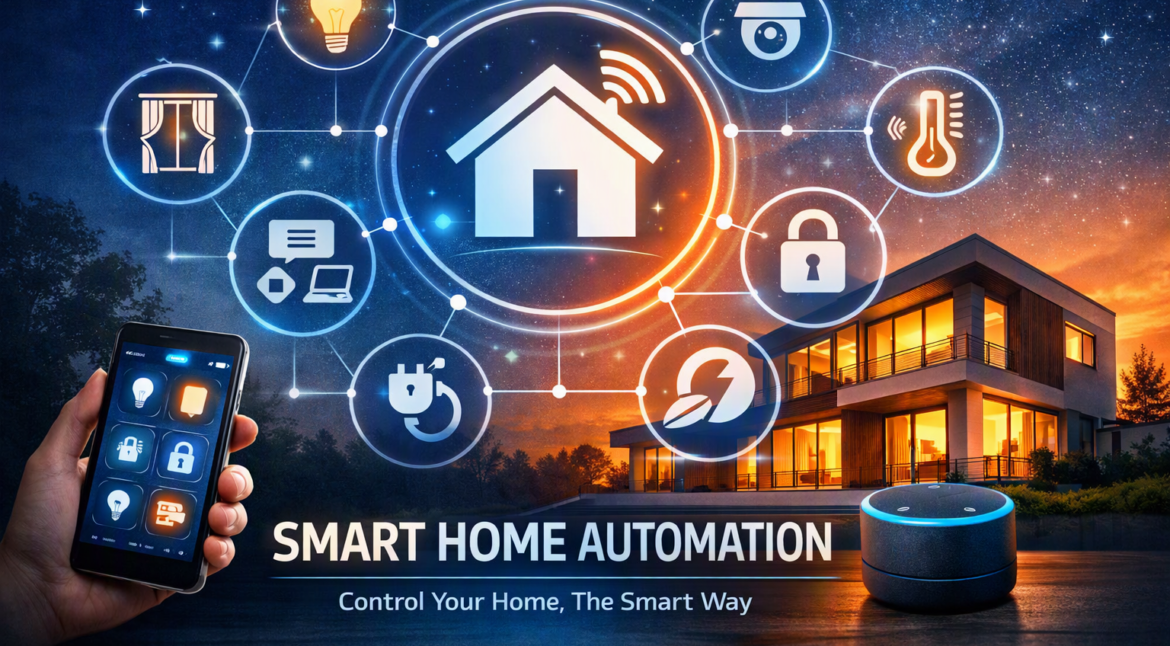
Smart home automation allows homeowners to control and automate different systems within their homes, including lighting, curtains, air conditioning, entertainment systems, security, and more. Instead of operating every device separately, automation brings multiple systems together so they can work intelligently according to the user’s preferences, schedule, or surroundings.
For modern homeowners, smart automation is no longer simply about convenience. It can also contribute to energy efficiency, better security, improved comfort, and a more personalized living experience.
What Is Smart Home Automation?
Smart home automation refers to the use of connected technologies to monitor, control, and automate different functions of a home.
A smart home may include automated:
- Lighting systems
- Curtains and blinds
- Air conditioning and climate control
- Security and access systems
- Entertainment systems
- Sensors and switches
- Energy management systems
- Scene-based controls
These devices can communicate through wired or wireless technologies and can often be controlled using switches, touch panels, mobile applications, voice assistants, or centralized control systems.
The key advantage is that automation allows different devices to work together rather than functioning as independent systems.
How Does Home Automation Work?
A typical automation system consists of several components working together.
1. Smart Sensors
Sensors can detect conditions such as motion, occupancy, temperature, or light levels. This information can be used to trigger automated actions.
For example, when a person enters a room, the system can detect occupancy and activate the required lighting.
2. Smart Controllers
Controllers process information from sensors and user commands. They determine what action should be performed based on programmed automation rules.
3. Smart Switches and Devices
Smart switches, dimmers, lighting controllers, curtain motors, and other connected devices execute the required commands.
4. User Interfaces
Homeowners can interact with their automation systems through wall switches, touch panels, mobile applications, remote controls, or other interfaces.
Smart Lighting: One of the Most Useful Automation Features
Lighting is often one of the first areas homeowners automate.
Traditional lighting generally requires manually switching lights on and off. Smart lighting automation can provide much greater flexibility.
Users can create different lighting scenes for different situations.
For example:
Morning Scene: Soft lighting that gradually increases as the day begins.
Movie Scene: Main lights dim while selected accent lights remain active.
Party Scene: Multiple lights operate at predefined brightness and color settings.
Away Scene: Selected lights can automatically turn off when everyone leaves.
Smart lighting can also use occupancy and daylight information to help reduce unnecessary energy consumption.
Automated Curtains and Blinds
Motorized curtains and blinds can become part of the overall home automation system.
Instead of manually opening or closing curtains, homeowners can operate them through a switch, remote control, app, or programmed schedule.
For example, curtains can automatically open in the morning and close in the evening.
They can also be coordinated with lighting and climate-control systems to create a more comfortable indoor environment.
Climate and AC Automation
Smart home automation can also integrate climate-control systems.
Temperature sensors can provide information about indoor conditions, while automated controls can help manage air conditioning according to programmed requirements.
For example, the system can reduce unnecessary cooling when rooms are unoccupied and restore preferred settings when occupants return.
This approach can help improve comfort while supporting more efficient energy use.
Smart Home Automation and Energy Efficiency
Energy efficiency is becoming increasingly important for modern homeowners.
Automation can help reduce energy wastage by making systems operate only when required.
Examples include:
- Turning off lights in unoccupied rooms
- Adjusting lighting according to daylight
- Managing air conditioning according to occupancy
- Scheduling appliances and systems
- Creating centralized “Away” modes
- Monitoring and controlling connected devices
Automation does not automatically guarantee a specific amount of energy savings, because results depend on the equipment, building, usage patterns, and automation settings. However, intelligent control can make it easier to avoid unnecessary consumption.
Improved Home Security
Automation can also support residential security.
Smart systems can integrate lighting, sensors, access control, cameras, and other security technologies.
For example, a homeowner can create an “Away” scene that switches off selected appliances, closes curtains, and activates predefined security settings.
Automated lighting can also be programmed to simulate occupancy while the residents are away.
The Role of Zigbee in Smart Homes
Wireless communication technologies have made smart home automation easier to implement.
Zigbee is one technology commonly used in smart automation applications. It is designed for low-power wireless communication between compatible devices and can support connected lighting, sensors, switches, and other automation components.
A suitable wireless automation architecture can provide flexibility while reducing the need for extensive cabling in certain applications.
The choice of technology should always depend on the project requirements, building structure, number of devices, interoperability needs, and desired control architecture.
Why Professional Automation Design Matters
A smart home is more than a collection of smart devices.
A successful automation project requires proper planning of:
- User requirements
- Device compatibility
- Communication protocols
- Electrical infrastructure
- Control logic
- Future expansion
- System reliability
- User experience
Professional automation solutions can help ensure that different systems work together as one coordinated environment.
The Future of Smart Homes
Smart home technology continues to evolve. Future systems are likely to become increasingly integrated, responsive, and energy-conscious.
Automation can move beyond simple commands such as “turn on the light” toward systems that respond intelligently to occupancy, schedules, environmental conditions, and user preferences.
The goal is not simply to add more technology to a home. The real objective is to create a living environment that is comfortable, convenient, efficient, and easy to control.
Conclusion
Smart home automation is transforming modern residential spaces by connecting lighting, climate control, curtains, security, and other systems into a coordinated environment.
Whether you are building a new home or upgrading an existing property, a well-designed automation system can provide greater control and personalization while helping reduce unnecessary energy consumption.
GSEN Automation provides automation solutions designed to bring intelligent control and modern technology into residential and commercial environments. With the right automation strategy, your home can become more than connected—it can become truly intelligent.